How we cover your event
Six building blocks that we combine to suit your event. No more than necessary, and always as much as your permit conditions require.
Right in the thick of it
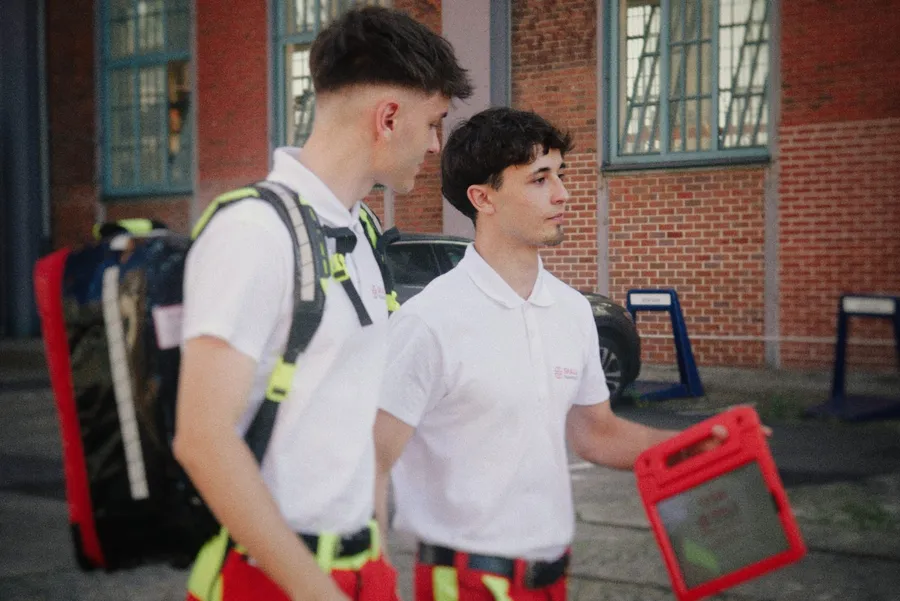
Foot patrol
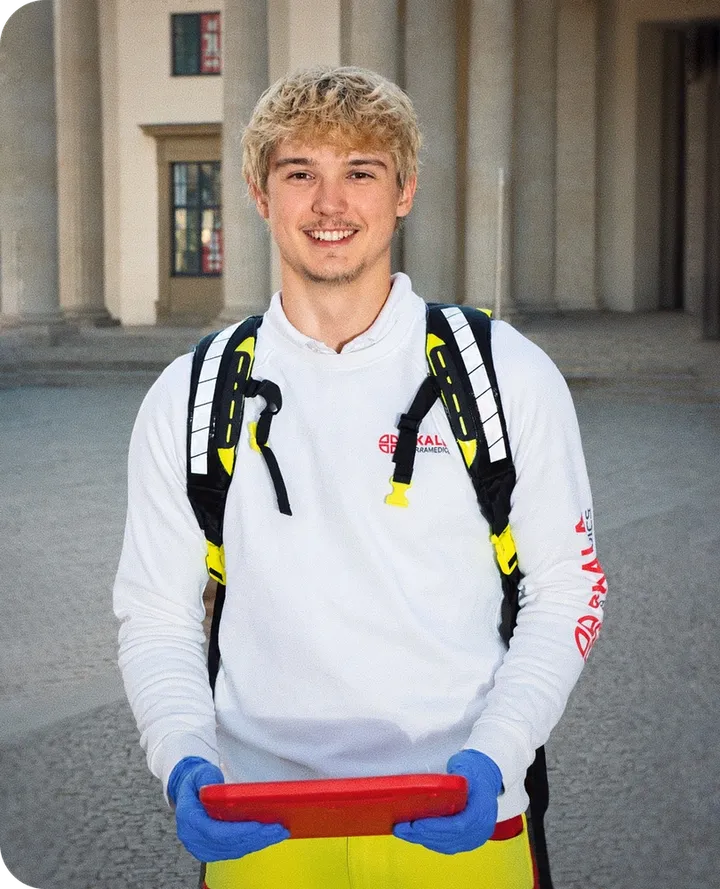
Teams of two with an emergency backpack and AED move through the crowd, around the site or through the venue. They spot emergencies early, reach the scene within seconds and, when needed, alert the emergency services and brief them on arrival.
- Ideal for concerts, clubs, street festivals and trade fairs
- Short distances, even in dense crowds
- In constant contact with the operations lead
The fixed point of contact
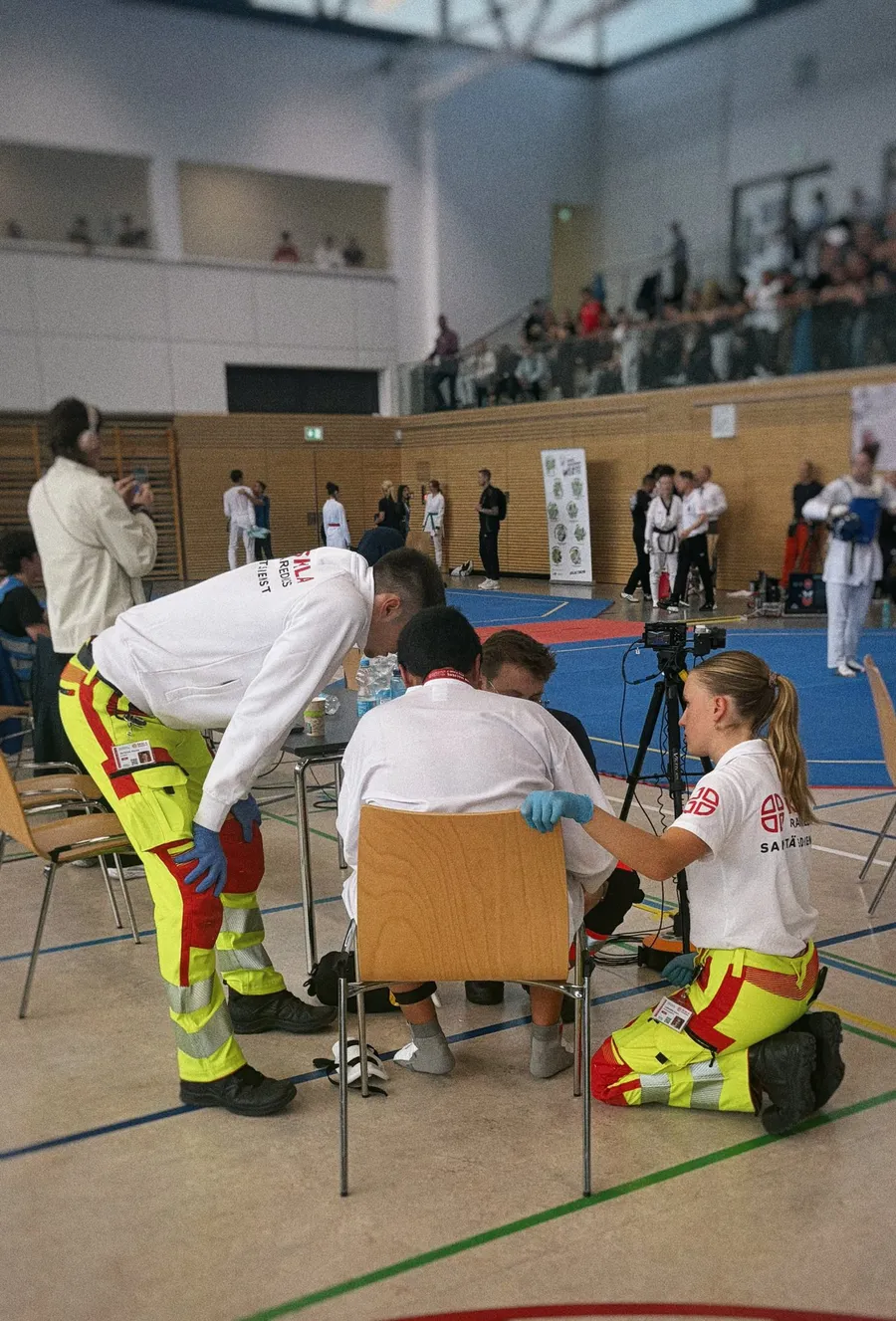
First aid post
A medical room, tent or container as a clearly marked point of contact. Here we treat and observe patients calmly, away from the bustle. This takes pressure off the emergency services, because many cases can be treated right on site.
- Stretchers, equipment and warming
- Observation for circulatory or substance-related problems
- Clearly signposted
Quickly anywhere on site
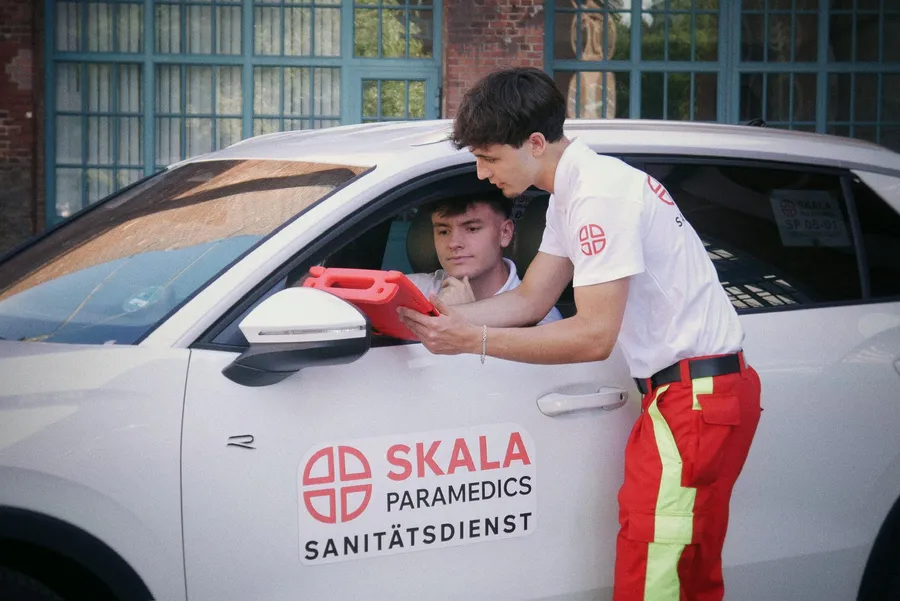
First responder
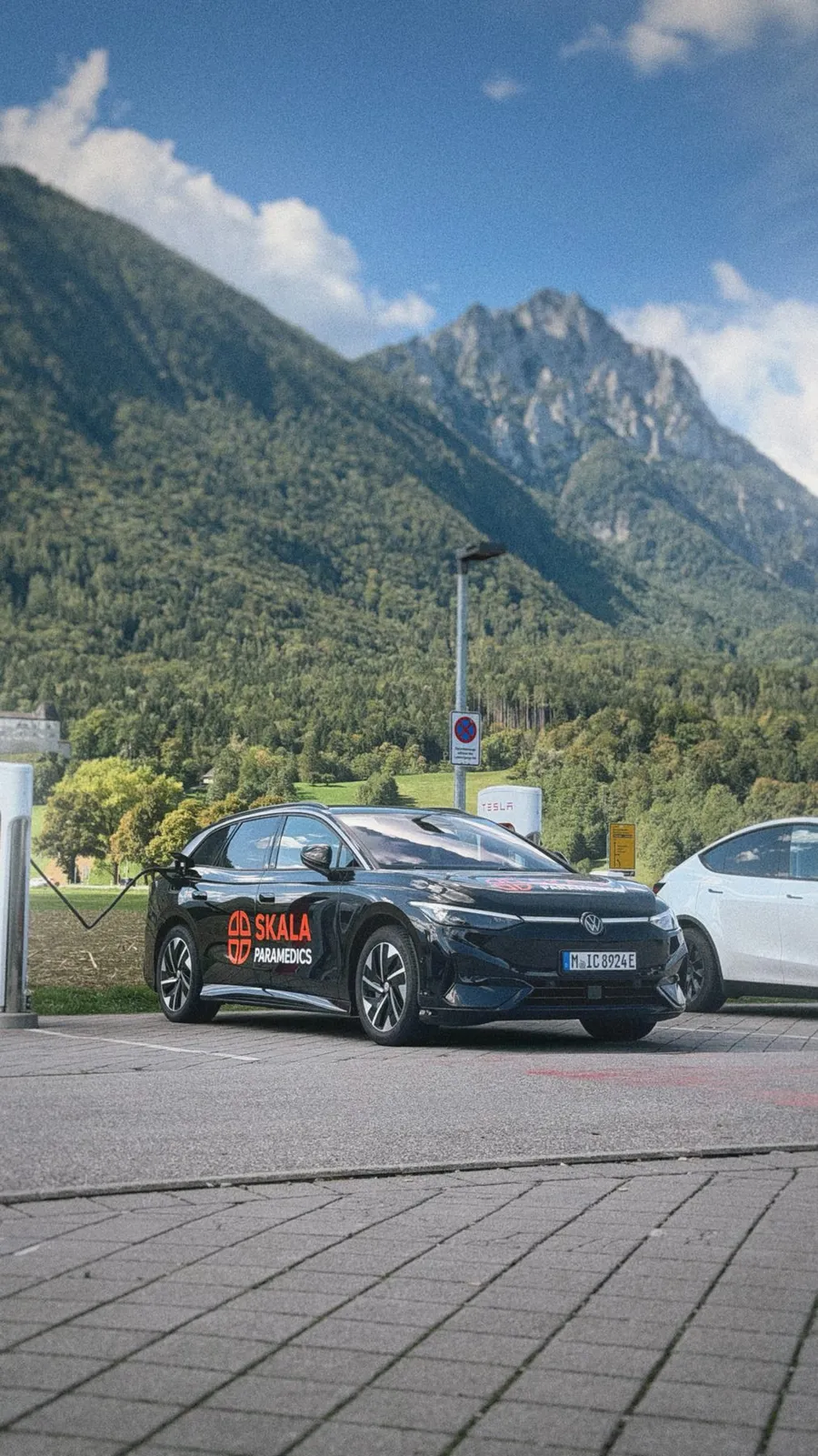
Our first responder vehicle brings responders and equipment straight to any point on your site. It is particularly suited to large grounds, race courses and film sets with changing locations.
- DIN-standard emergency backpack and AED on board
- Fast across large areas and courses
- Vehicle €225 per deployment day, personnel at hourly rates
Mobile treatment unit
Patient transport ambulance
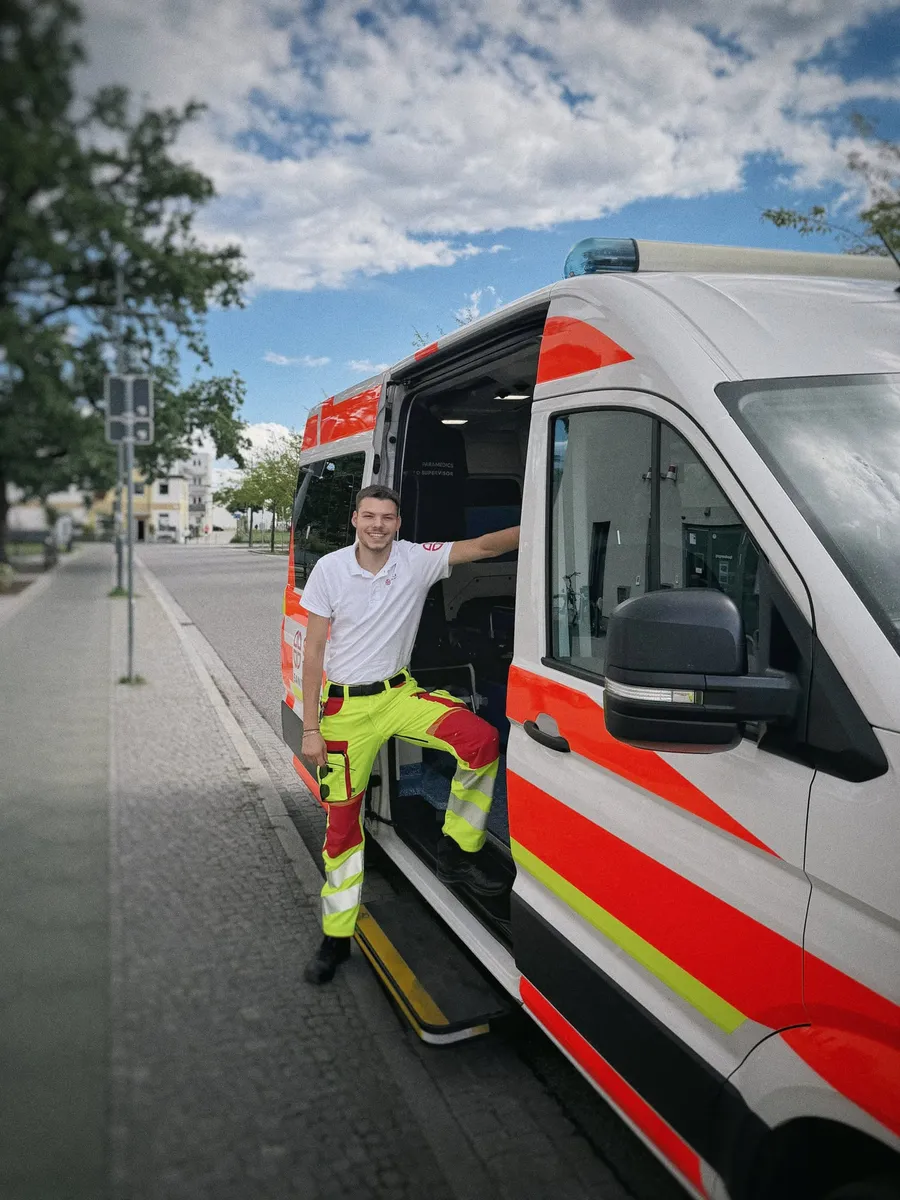
Our patient transport ambulances (KTW) to DIN EN 1789 type A2 serve as a mobile treatment unit on site, with stretcher, oxygen and emergency equipment. They are suited to treating patients lying down or can act as the first aid post at smaller events. When needed, they also bring patients from the course to the first aid post.
- With stretcher, oxygen and emergency equipment
- Crewed by EMTs
- Vehicle €600 per deployment day, personnel at hourly rates
On-site coordination
Operations lead
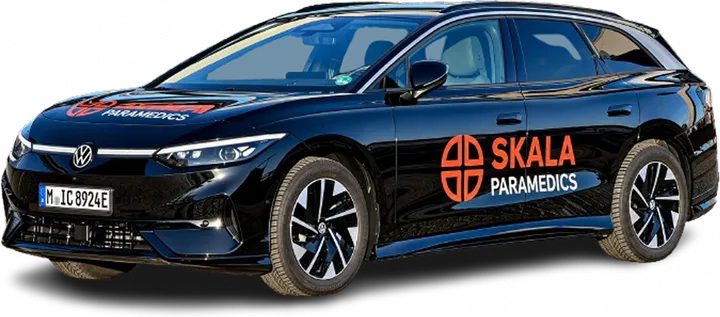
From medium-sized events upwards, an experienced operations lead takes charge of the medical cover. They deploy the teams, stay in touch with event management, security, police and fire brigade, and are your dedicated contact throughout the event.
- Mobile on site with their own vehicle and equipment
- One contact person for everyone involved
- Radio contact with all teams
For advanced care
Paramedics & doctors
For major events or particular risks, we add paramedics to the team and, on request, emergency doctors. This means advanced medical care is also possible right on site.
- Paramedic €52 per hour
- Emergency doctor €115 per hour
- As needed and as required by the authorities
Fleet
Our vehicles
Every vehicle carries an emergency backpack and AED. We plan which vehicles are deployed to suit your event.
Operations lead
Command vehicle
Coordination and equipment on site
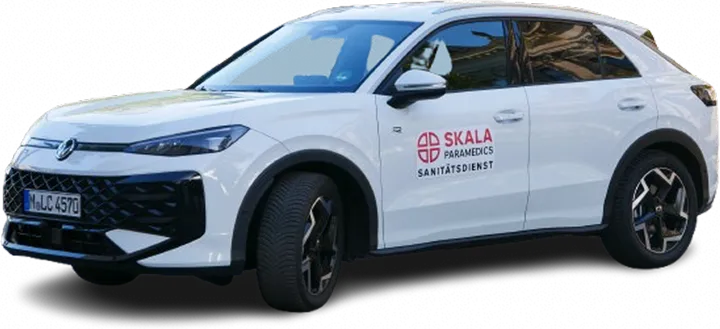
Rapid response
First responder
Quickly at any point on the site
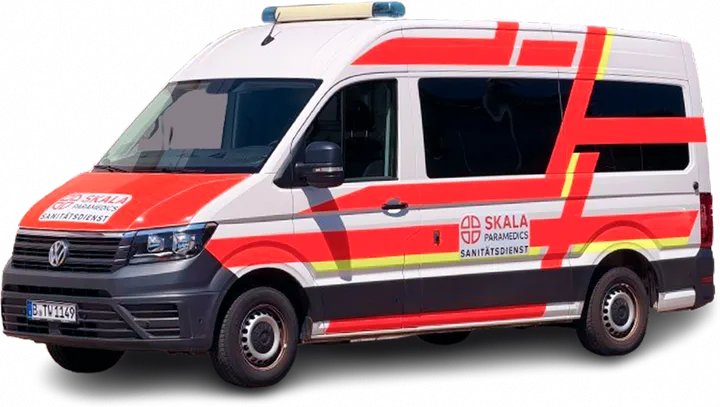
DIN EN 1789 type A2
Patient transport ambulance
Mobile treatment unit with stretcher
After the event
Your incident report
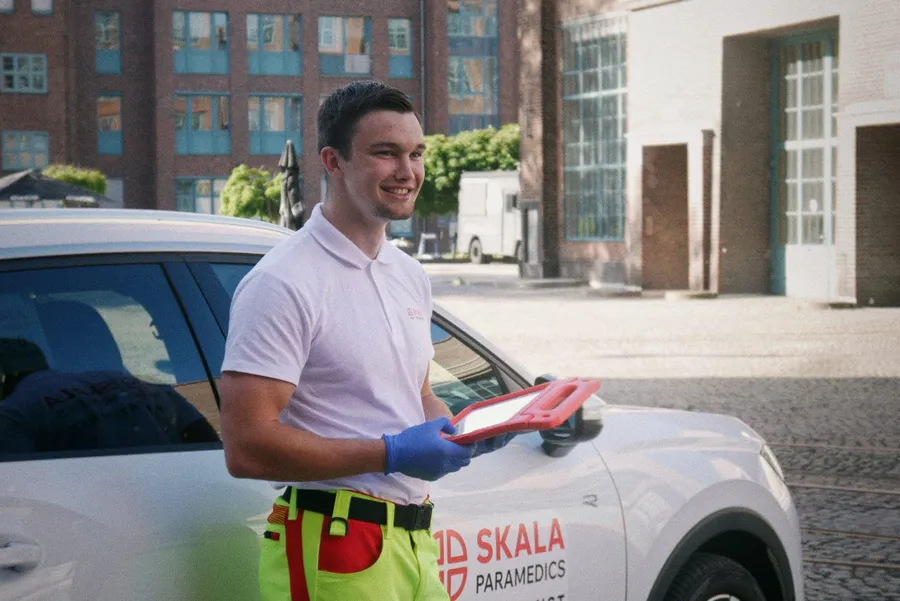
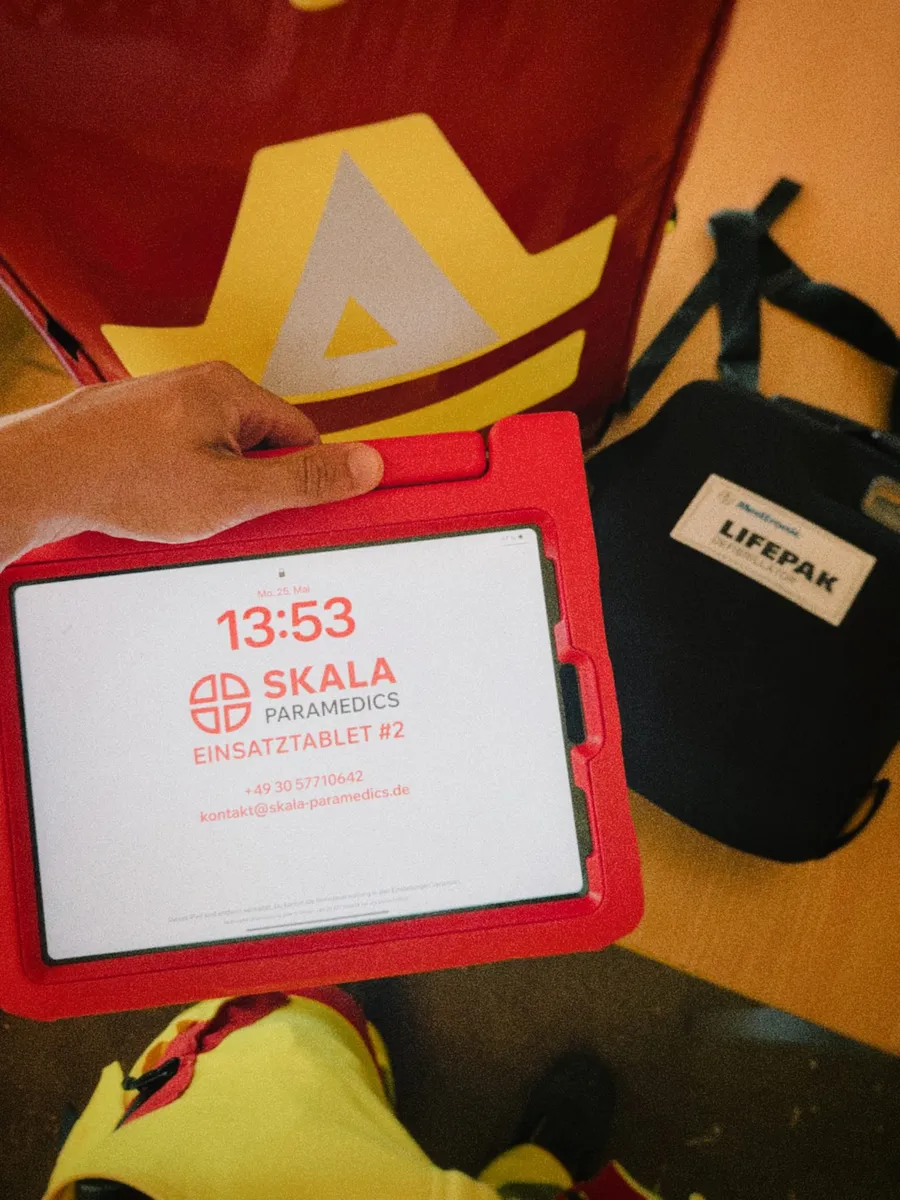
We document every case digitally on dedicated iPads. After the event you receive a report that you can use for the authorities, your insurer or planning your next event.
- Number of patients and cases treated
- Types of injuries and illnesses
- Outcome, for example handover to the emergency services
- Deployment times and responders on duty
Which deployment option do I need?
That depends on the number of visitors, the site and the type of event. For small events a foot patrol is often enough; large events combine several building blocks. We will recommend the right set-up for you free of charge.
Do you transport patients?
We always report emergencies immediately to the emergency services via 112. Short distances on site, for example from the course to the first aid post, are covered by our own patient transport ambulances. Hospital transfers are possible by arrangement with the authorities, but are not a core service.
What is in an emergency backpack?
First aid equipment to DIN standard, including dressings, a bag valve mask, suction, and blood pressure and blood sugar measurement. An AED is also on hand at every deployment.
Will I get an incident report?
Yes. After every event you receive a report with the number of patients, type of care given, outcome and deployment times.